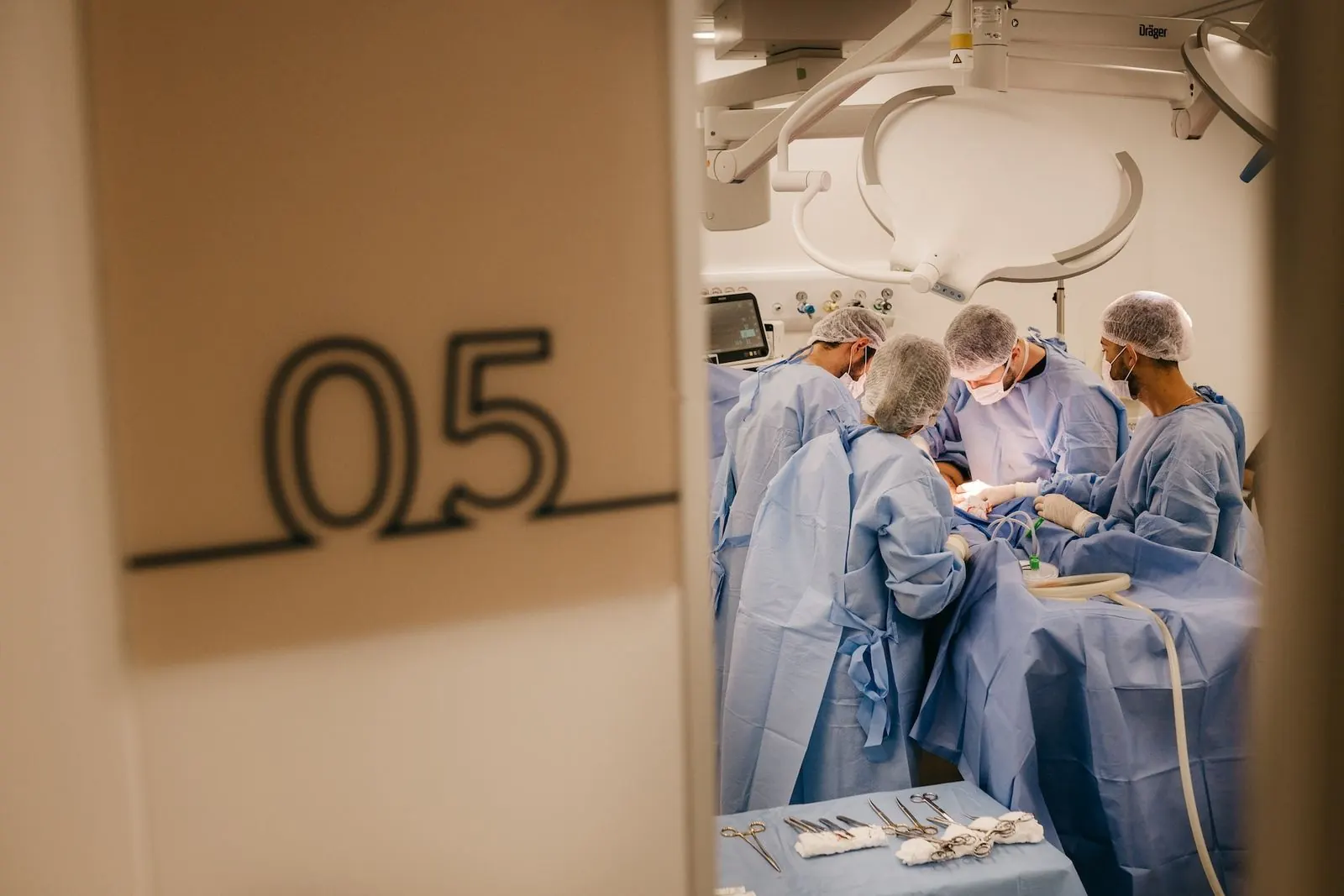
In an emergency, dial 112, Italy’s 911. It’s free, works across Puglia from any phone, and an interpreter can join the call in English; the old ambulance number, 118, still works and reaches the same center. Or go to the nearest public emergency room (pronto soccorso), which treats everyone, insured or not. These are the main public hospitals with an ER in Puglia’s provincial capitals, Gallipoli and Ostuni:
| City | Main public hospital | ER level | Beds | Drive from center | ER address |
|---|---|---|---|---|---|
| Bari | Policlinico di Bari (Asclepios ER) | Major trauma center | 1,270 | 6 min | Piazza Giulio Cesare 11 |
| Lecce | Ospedale Vito Fazzi | Major trauma center | 853 | 6 min | Piazzetta Muratore |
| Brindisi | Ospedale Perrino | Major trauma center | 647 | 9 min | SS7 Brindisi-Mesagne |
| Taranto | Ospedale SS. Annunziata | Major trauma center | 465 | 3 min | Via Bruno 1 |
| Foggia | Ospedali Riuniti | Major trauma center | 889 | 7 min | Viale Luigi Pinto 1 |
| Gallipoli | Ospedale Sacro Cuore di Gesù | Full ER | 227 | 4 min | Strada Provinciale per Alezio 13 |
| Ostuni | Ospedale di Ostuni | Basic ER | 114 | 2 min | ER entrance on Via Luigi Miccoli |
Whether you have made Puglia your home, moved here for work or are staying for a long season, you will want to know where to turn for medical care. This guide explains how the system works and introduces the region’s main public and private hospitals, so you can make informed choices before you need them.
This guide is about where to go for care: hospitals, emergency rooms and how the system is organized in Puglia. For enrolling in the public system, see public health insurance in Italy (SSN); for private cover, our guide to private health insurance in Puglia.
Updated October 2026 · Puglia Everyday research
How Italian healthcare works
Italy’s national health service, the Servizio Sanitario Nazionale (SSN), provides universal cover, but it is run region by region, and in Puglia the regional health service and its local health authorities (ASL) organize care. Alongside it sits a substantial private sector. The distinction matters, because it affects how you access care, how long you wait and what you pay. The public system offers good care but can involve long waits; private providers are usually quicker and charge for the privilege.
EHIC in Puglia
Citizens of EU countries can use the European Health Insurance Card (EHIC) during a temporary stay. It entitles you to medically necessary care from the public system on the same terms as people insured in Italy, including any patient charges locals pay. Check that your card is valid before you travel and carry it with you. The EHIC does not replace travel insurance, and it does not cover private treatment or repatriation.
Private insurance gives you a choice of hospital
Private health insurance widens your options. Depending on the policy, you can use private hospitals and clinics, skipping public waiting lists, while still relying on the public system when it suits you better. Check what your policy covers, and which facilities it works with directly, before you need treatment.
Emergency care in Puglia
Emergency departments (pronto soccorso) in public hospitals treat anyone who needs urgent care, whatever their insurance or nationality; nobody is turned away. What you pay afterwards depends on your cover and residency. Visitors from outside the EU without insurance may be billed for treatment and hospital stays, and visits judged non-urgent (a white code, codice bianco) can incur a charge even for people covered by the SSN.
Traveling with children? Two area guides set out where to go in an emergency: hospitals and children’s emergency care in Salento and hospitals and children’s emergency care in the Valle d’Itria. Both list which hospitals have an A&E and a children’s ward, and explain the guardia medica and duty pharmacies.
Key finding: Puglia Everyday research found that one number, 112, now reaches every emergency service across Puglia, with English on request, and that the main public ERs in Bari, Lecce, Brindisi, Taranto and Foggia are all major trauma centers, each within about 10 minutes’ drive of the city center (October 2026).

Cite this: Puglia Everyday research, “In an emergency, dial 112”, October 2026, pugliaeveryday.com/living/comprehensive-guide-to-healthcare-in-puglia/ · Download the data (CSV)
Finding a doctor in Puglia
General practitioners (medici di base) in the public system
In the public system, your family doctor, the medico di base, is the first point of contact. GPs diagnose and treat common problems and refer you to specialists when needed. Residents registered with the SSN choose a GP from those available in their area; visitors can use the tourist medical service (guardia medica turistica) that many coastal areas run in summer. Find your Medici di Base in Puglia here.
Specialists and referrals
The public system gives access to specialists in every field, but you normally need a referral (impegnativa) from your GP first, and waiting times vary. Understanding how referrals and bookings work will save you time.
Private specialists can be seen directly, usually within days, which makes them a good option for second opinions, particular expertise or elective treatment. You pay the fee yourself, or claim it from your insurer.
University teaching hospitals in Puglia
Puglia’s university teaching hospitals are its largest and most specialized public hospitals, all with full emergency departments. Apart from emergencies, most services require a referral from your SSN doctor, and SSN patients pay only the standard charges (ticket), if any.
Azienda Ospedaliera Policlinico di Bari – University of Bari, Bari
The Policlinico Consortium University Hospital of Bari, linked to the University of Bari’s medical school, is the region’s largest hospital. It combines the Policlinico, a vast complex of hospital and university departments, with the Giovanni XXIII children’s hospital, and includes the Asclepios emergency and surgical complex. It plays a central role in teaching, research and the regional hospital network.
Azienda Ospedaliera Universitaria Ospedali Riuniti di Foggia – University of Foggia, Foggia
The “Ospedali Riuniti” of Foggia is the university hospital for the north of the region. Its departments include emergency medicine, women’s and children’s health, cardiothoracic and vascular surgery and internal medicine, and it also runs the Lastaria hospital in Lucera, which focuses on medical, geriatric and rehabilitation care.
Ospedale “Vito Fazzi”, Lecce
The Vito Fazzi Hospital is the main hospital of ASL Lecce and the reference hospital for the Salento. Its many departments range from emergency medicine and surgery, cardiology and cardiac surgery to neurosurgery, pediatrics and pediatric surgery, a neonatal intensive care unit, pediatric onco-hematology, oncology and radiotherapy, obstetrics and gynecology, and most other specialties. The ASL page linked above lists them all.
Ospedale “Santissima Annunziata”– University of Bari, Taranto
Santissima Annunziata Hospital in Taranto is the main hospital of ASL Taranto, with a broad range of services including cardiology, thoracic surgery, neurosurgery, gastroenterology and obstetrics.
Ente ecclesiastico Ospedale regionale “Francesco Miulli”– LUM University, Acquaviva delle Fonti
The “Miulli” Hospital in Acquaviva delle Fonti is a church-run hospital with a history going back many centuries, today classified as a regional general hospital within the public system. It occupies a modern single building and covers a wide range of specialties, including cardiology, surgery, gynecology, geriatrics, radiology, oncology and urology.
Azienda ospedaliera “Cardinale Giovanni Panico”– University of Bari, Tricase
The “Cardinale Giovanni Panico” Hospital in Tricase, in the far south of the Salento, offers a wide range of services, including surgery, dialysis, pediatric care, hospice care and advanced diagnostics, and works with universities on teaching.
Ospedale “Perrino”- University of Bari, Brindisi
The Perrino in Brindisi is the main hospital of ASL Brindisi and the reference hospital for the province, with a full emergency department and a broad range of specialties.
GVM: a private hospital network in Puglia
GVM Hospitals in Puglia belong to GVM Care & Research, an Italian private hospital group, and include facilities in Bari and Lecce among other places. Their services span cardiology and cardiac surgery, general and specialist surgery, orthopaedics, diagnostic imaging, oncology, rehabilitation, check-ups and many other specialties. The link above lists what each Puglian facility offers.
Private hospitals in Lecce
Private hospitals and clinics offer a broad range of treatments, usually with much shorter waits. Some also work with the SSN under accreditation (convenzione), so certain services are available on the same terms as in public hospitals; others are private only.
Private care costs more, sometimes far more, than the public system. This is where private Italian health insurance earns its keep, especially if you intend to use private facilities while you live in Puglia.
Corporis Lab (Lecce)
The Corporis Lab Medical Center in Lecce is a private outpatient center covering numerous specialties, including angiology, cardiology, general and oncological surgery and pediatrics, with a multidisciplinary approach.
Casa di Cura Prof. Petrucciani (Lecce)
The Petrucciani Clinic in Lecce is a private clinic with modern facilities, known in particular for urology and cardiac rehabilitation.
Villa Verde
Villa Verde, a private hospital in Lecce, specializes in psychiatric care, intensive care and rehabilitation for severe acquired brain injuries, and neurorehabilitation, with outpatient clinics for neurological assessment and treatment.
Private hospitals in Brindisi
Casa di Cura Salus
Casa di Cura Salus Srl in Brindisi, founded in the 1950s and since renovated, is a multi-specialist clinic for inpatients and outpatients. Its services include cardiology and cardiothoracic surgery, general, vascular and spinal surgery, a level II assisted reproduction center, diagnostic imaging, endoscopy, rehabilitation, gynecology and obstetrics, orthopaedics, ophthalmology and ENT.
Private hospital in Foggia
Casa Sollievo della Sofferenza, San Giovanni Rotondo
Casa Sollievo della Sofferenza, the hospital founded by Padre Pio and opened in 1956, is a church-run hospital working within the national health service. Beyond its large main complex in San Giovanni Rotondo, it runs dialysis centers elsewhere in the province and the Mendel institute in Rome. It is known for clinical research, particularly into genetic and hereditary diseases, and for its work in training doctors, biologists and nurses.
Private hospitals in Bari
Ente Ecclesiastico Ospedale Generale Regionale ‘F. MIULLI’
The “Miulli” Hospital in Acquaviva delle Fonti, described above, is church-run and classified within the public system, which is why it appears in both lists.
Private hospitals in Galatina
Clinica San Francesco
The San Francesco Clinic is a multi-specialist hospital accredited with the regional health service, open since 1971. Its services include anaesthesia and intensive care, general surgery, gynecology, ENT, general medicine, urology, ophthalmology, laboratory analysis and radiology, for inpatients and outpatients.
Private hospitals in Tricase
Hospital “Card. G. Panico”
The Panico Hospital, described above, is church-run and works within the public system. Its specialties include cardiology, hematology, nephrology, neurology, oncology, general and vascular surgery, urology, neurosurgery, orthopaedics, obstetrics, pediatrics and a neonatal intensive care unit, as well as interventional radiology, nuclear medicine and medical genetics.
Public Hospitals in Lecce
- “Santa Caterina Novella” Hospital Galatina
- “Veris Delli Ponti” Hospital in Scorrano
- “Francesco Ferrari” Hospital – Casarano
- “Sacred Heart of Jesus” Hospital Gallipoli
- “San Giuseppe da Copertino” Hospital Copertino
Public Hospitals in Bari
- “Di Venere” Hospital – Carbonara di Bari
- “San Giacomo” Hospital – Monopoli
- “San Paolo” Hospital – Bari
- Murgia Hospital “Fabio Perinei”
- S. Maria Degli Angeli Hospital – Putignano
- “Umberto I” Hospital – Corato
- Don Tonino Bello Molfetta Hospital
Public Hospitals in Foggia
Public Hospitals in Barletta Andria Trani
- “V. Emanuele II” Hospital – Bisceglie
- “Mons. Dimiccoli” Hospital – Barletta
- “L. Bonomo” Hospital – Andria
- “Caduti in Guerra” Hospital – Canosa di Puglia
Public Hospitals in Brindisi
- Presidio of Francavilla Fontana
- Ostuni Hospital
- Brindisi “Di Summa – Perrino” Hospital
- “S. Raffaele Foundation” Rehabilitation Unit
Public Hospitals in Taranto
- “Marianna Giannuzzi” Hospital- Eastern Hospital Unit Manduri
- “San Marco” Hospital – Grottaglie
- Central Hospital – SS. Annunziata
- “SG Moscati” Hospital
- Valle d’Itria Hospital – Martina Franca
- “San Pio Hospital” Western Hospital Unit – Castellaneta
Over to you
Know where your nearest emergency department is, register with a GP if you are resident, and decide whether private insurance makes sense for you. Visitors should travel with insurance and, if they are EU citizens, an EHIC. With that in place, you can get on with enjoying the region.
Quick answers from our research
What is the emergency number in Puglia?
112, Italy’s 911. It has covered all of Puglia since May 2024, is free from any phone and can bring in an interpreter for English. The old numbers, including 118 for an ambulance, still work and reach the same center.
Will an ER in Puglia treat me without insurance?
Yes. Public emergency departments treat anyone who needs urgent care, whatever their insurance or nationality. Visitors from outside the EU without insurance may be billed afterwards.
What is the main ER in Lecce?
Ospedale Vito Fazzi, Piazzetta Muratore, about 6 minutes’ drive from Piazza Sant’Oronzo. It is a major trauma center with 853 beds. In an emergency, dial 112.
What is the main ER in Bari?
The Policlinico di Bari (Asclepios ER), Piazza Giulio Cesare 11, about 6 minutes’ drive from Piazza Mercantile. It is the region’s largest hospital, with 1,270 beds. In an emergency, dial 112.