
The property guide · Puglia
How to Buy a House in Puglia: The Complete Guide
From the first viewing to the keys: the offer, the deposit, the checks, the notary and the taxes, with the official rules and what we have seen on the ground.
On this page: Start here · The process · Before you offer · Offer and deposit · The notary · Taxes and costs · Documents · Common surprises · Why agents go silent · Every article · FAQ · Sources
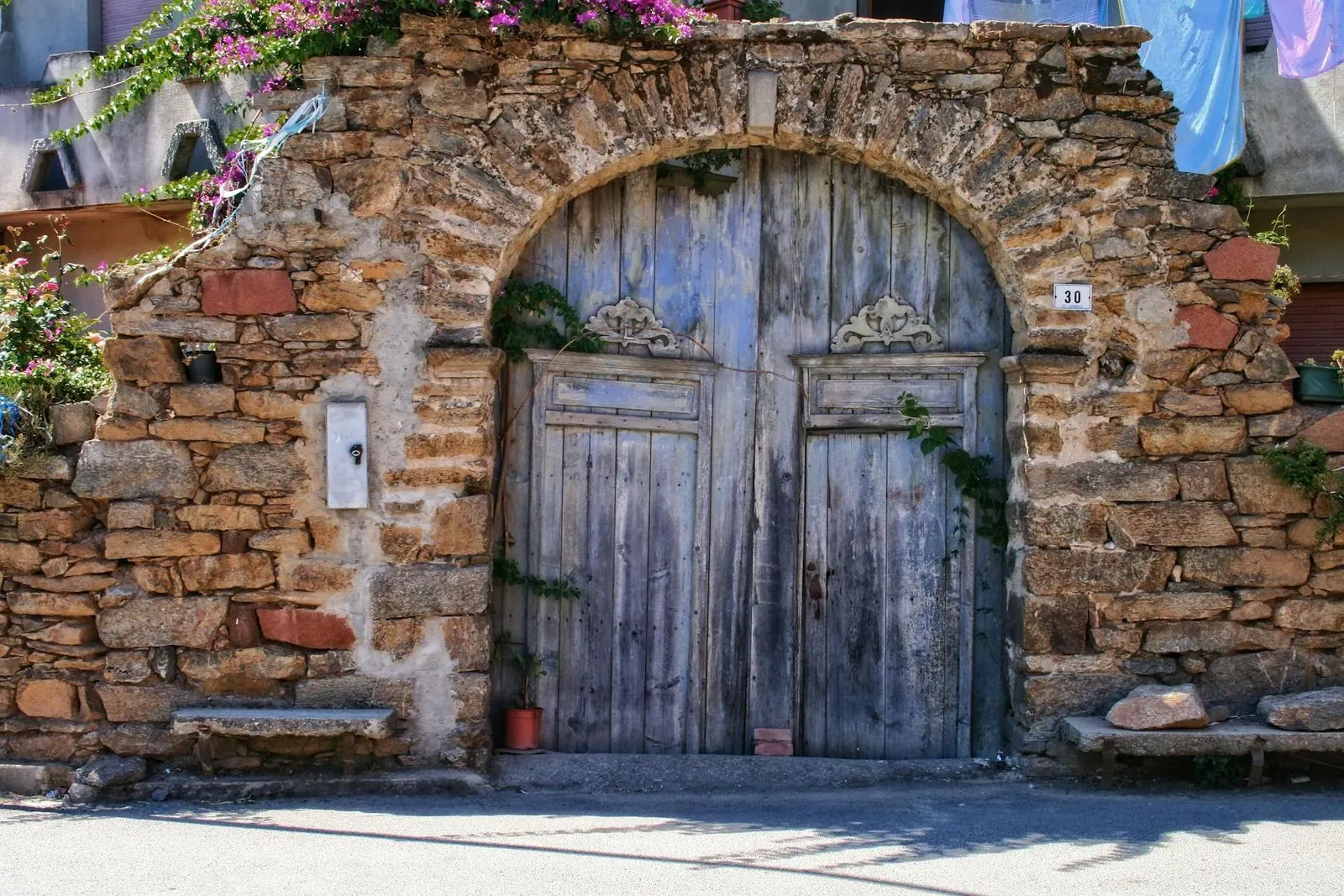
Photo by Valerio Giannattasio, portfolio on Unsplash
Buying a house in Puglia is a pleasure, but the process has its own logic, and it pays to understand it before you fall for a view. The law sets out one path. What we have seen in recent years is often shorter, and the difference matters to your money.
This is our front door to buying: how a purchase works from first viewing to the notary’s signature, the taxes and the pitfalls foreign buyers most often meet, and an article behind every step. Start with the checks, before you sign anything.
By Puglia Everyday · Updated 18 November 2026
Start here
The first article, before you offer
The process, in two paths
The rules, and what we have seen
No two purchases run at the same speed, and a missing document can stall everything. These are the typical ranges we see for a straightforward resale house, not legal deadlines:
- Before you search (1-3 weeks): get your codice fiscale (Italian tax code), which you need for the offer, the deed and utilities, and decide how you will pay.
- Search and viewings (weeks to months): the stretch nobody can predict. Plan at least one trip in a quiet month, when you see a town as it really is.
- Checks before the offer (1-3 weeks): ask for the cadastral record, the plans and the planning history, and have a technician compare them with what is actually built.
- Offer and acceptance (a few days to 2 weeks): the written offer carries a deadline for the seller to answer.
- Acceptance to deed (usually three to six months for a cash purchase, from our experience): mostly because the seller doesn’t have every document ready, for example cadastral plans, building permits or the energy certificate (APE), and gathering them takes time. A mortgage takes longer, because of the bank’s valuation and approval.
- After the deed (a few weeks): the notary registers the sale, and you switch utilities and, if you claim prima casa, move your residence.
On paper, an accepted offer that contains every term of the sale can already be a preliminary contract (Civil Code, article 1326), and it must be registered with the Agenzia delle Entrate within 30 days, with a tax of 0.5% on the deposit. A notarial preliminary contract can also be transcribed in the property registers, the only step that protects you if the seller sells to someone else.
What we have seen in Puglia in recent years, and still today, is simpler: the buyer signs an offer, the deposit is a check made out to the seller that the agent holds uncashed until the notary, and there is no compromesso in between. Nothing is registered. In effect, the agent acts as an unofficial escrow. Our article on how a house offer works sets the two side by side, with the costs and the risks.

We’re reporting how purchases often happen, not recommending one path over the other. Talk to your notary before you sign.
The offer
How a house offer works in Puglia
The deposit check, the 30-day registration rule, what it costs, and what the agent’s unofficial escrow does and does not protect.
Before you offer: the checks
Find the problems while you can still walk away
The search usually begins online or with local agents, followed by viewings. Before going further, check that the house is correctly registered with the land registry. The visura catastale, the cadastral record, gives its registered details, and the building must also comply with planning and building rules, since irregularities can cause legal problems later. To see what your budget buys, our town-by-town article on what €100k, €200k and €400k buy in Puglia turns asking prices into square meters.
The certificate of habitability, the agibilità, is often overlooked, and many older houses in Puglia do not have one. Its absence does not necessarily stop a sale, but find out whether it could be obtained, and at what cost. Our articles on cadastral and planning compliance, the certificate of habitability and hiring an English-speaking geometra go deeper.
For the full set of pre-purchase checks, see Due Diligence: 11 Checks You Must Do When Buying a House in Puglia.
The offer and the deposit
One signature, and a check
When you find the right house, you make a written offer, the proposta d’acquisto, usually on the agent’s form, setting out the price, the payment terms and the deed date. A deposit goes with it, usually as a check. If the offer is complete and the seller accepts, the deposit typically becomes a caparra confirmatoria: if you back out, the seller can keep it; if the seller backs out, you can claim double (Civil Code, article 1385).
Some agents ask for their commission as soon as the offer is accepted. In this case, the smart thing to do is push for commission payment at completion (the notary deed). That is not legal advice. Agree the commission in writing before you sign.

The deposit
Caparra confirmatoria: what buyers must know
How the confirmatory deposit works, when you lose it, when you can claim double, and how it differs from an advance.
The notary
The one signature that transfers the house
In Italy the notary (notaio) is central to any property sale. As a public official, the notary checks that the transfer is lawful, searches the title and looks for mortgages, liens or other problems. The final deed, the rogito, is signed before the notary, the balance is paid, and ownership passes to you. By custom the buyer chooses and pays the notary. If you do not speak Italian well, or cannot be there, you can give power of attorney to someone you trust.

The notary
Italian notaio: choosing a notary wisely
What the notary does and does not do for you, how fees work, and why the choice is usually yours.
Taxes and costs
Set by law, checked October and November 2026
Taxes depend on who is selling and whether you qualify for prima casa (main home) relief. According to the Agenzia delle Entrate, when you buy from a private seller (or a company selling without VAT), registration tax is 9% of the cadastral value, or 2% with prima casa, with a minimum of €1,000, plus mortgage and cadastral taxes of €50 each. When you buy from a builder or company charging VAT, you pay VAT at 10%, or 4% for a qualifying main home (22% for luxury categories A/1, A/8 and A/9), plus registration, mortgage and cadastral taxes of €200 each.
A private individual buying a home can ask in the deed for the price-value rule: registration tax is then calculated on the cadastral value, which is the cadastral income raised by 5% and multiplied by 120, or by 110 with prima casa. The tax agency’s own example: a prima casa with a cadastral income of €900, bought for €200,000, pays €2,079 (900 × 1.05 × 110 × 2%) instead of €4,000 on the price.
If a preliminary contract or an accepted offer is registered, it costs €200, stamp duty of €16 per four pages, and, for contracts signed from 1 January 2025, 0.5% of a confirmatory deposit or of an advance not subject to VAT, credited later against the deed taxes. Older articles quoting 3% on advances describe the rule before 2025; 3% now applies only to a caparra penitenziale.
Professional fees are not set by law. The notary has no fixed national tariff, so ask at least two for a written quote covering fees and taxes together. Agent commission is negotiated and usually paid by both sides; confirm the figure in writing before you sign the offer. Add a technician for compliance checks, and an interpreter at the deed if you need one. Once you own the house, the main recurring tax is IMU, the municipal property tax; a main home is generally exempt unless it is in a luxury category.
The tax break
Prima casa tax break in Italy: who qualifies
The conditions, the 18-month residence rule, and what the relief saves on registration tax or VAT.
Documents checklist
- Codice fiscale for every buyer.
- Proposta d’acquisto (purchase offer), and a preliminary contract if one is signed. See how a house offer works and the rules on the deposit.
- Visura catastale and the planimetria catastale (cadastral floor plan), which should match the house as built.
- APE (energy performance certificate), which the seller must provide.
- Planning compliance: the permits that cover what was built.
- Agibilità, or proof that it can be obtained.
- A valid passport or ID, and proof of where the purchase money comes from, which the notary and the bank will ask for.
Restrictions for some non-EU buyers
Citizens of EU and EEA countries can buy freely. For other nationalities, Italian law applies a reciprocity condition: a foreign citizen can buy only if an Italian could do the same in that person’s country, unless a bilateral treaty applies or the buyer holds a qualifying Italian residence permit. The notary checks this case by case, using the Ministry of Foreign Affairs country sheets, so ask early.
Mortgages
Financing can be difficult for foreigners, especially in the south. Italian banks are often reluctant to lend to non-residents, and even opening an account as a non-resident can be slow. Many buyers arrange funds in advance or borrow at home.
Common surprises
Unregistered works. A walled-in veranda, an extra bathroom or a converted storeroom that never got a permit is an abuso edilizio (building violation). Some can be regularized after the fact, some cannot, and the cost falls on whoever owns the house. Make fixing them a condition of the offer, or adjust the price.
Old amnesties. Italy passed three national building amnesties (condono edilizio), in 1985 (Law 47/1985), 1994 (Law 724/1994, article 39) and 2003 (Decree-Law 269/2003, article 32). All three are closed to new applications. Your technician should check that any condono was actually granted, not just requested.
Trulli and masserie. Rural trulli and masserie often sit on agricultural land with strict limits on building, and parts may be registered as farm buildings rather than homes. Check the zoning with the town hall before you get attached. Our article on buying a trullo in Puglia has asking prices and the permit checks to run.
Mismatched plans. If the cadastral plan does not match the house, the deed can be blocked until it is updated. It is usually a small fix if caught early.
Why agents go silent, and how to get a reply
Many buyers email an estate agent about a house, then another, and hear nothing back. It is rarely personal; the local market simply works differently:
- Relationships come first. Business in the south runs on personal contact, so an email from an unknown foreigner carries less weight than a phone call or a visit.
- Small, busy offices. Agents market properties, deal with sellers, show houses and handle paperwork, so replies go first to buyers who seem ready to act.
- Language. Many agents speak some English, but not always enough for detailed questions by email.
- A local market. Many houses sell by word of mouth rather than online listings.
To get answers: get your codice fiscale early, make your inquiries specific, follow an email with a phone call, and visit in person if you can. A bilingual geometra or a notary can act as intermediary. Most agents work for both sides; here is what that means if you want a buyer’s agent.
Every article we have written on buying in Puglia
All of it, in one place
After the keys, daily-life articles such as Italian furniture stores in Puglia live in Life Here.
FAQ
Do I need to live in Italy to buy?
No. Residency is not required. EU and EEA citizens can buy freely, and other nationalities are subject to reciprocity rules. You do need a codice fiscale.
Is an accepted offer binding?
It can be. If the offer contains every essential term, the seller’s acceptance can form a preliminary contract (Civil Code, article 1326), which must be registered within 30 days.
Is a compromesso always signed?
Not in what we have seen in Puglia. Often the accepted offer is the only contract before the notary deed.
Can I get prima casa relief as a foreigner?
Yes, if you meet the conditions, which include moving your residence to the town within 18 months of the purchase, according to the Agenzia delle Entrate.
Who chooses the notary?
By custom the buyer chooses and pays the notary.
How long does it take?
From our experience, acceptance to the notary deed usually takes three to six months for a cash purchase, mostly because the seller doesn’t have every document ready (for example cadastral plans, building permits or the energy certificate, APE) and gathering them takes time. With a mortgage it takes longer, because the bank’s valuation and approval add time.
Sources
Opened or re-opened on 18 November 2026, Europe/Rome: Agenzia delle Entrate, “Prima dell’acquisto è bene” (registration within 30 days, €200, stamp duty, 0.5% from 1 January 2025, agents’ duty, transcription); Agenzia delle Entrate, “Contratto preliminare di compravendita”; Law 296/2006, article 1, paragraph 46; Civil Code, articles 1326, 1385 and 2645-bis. Checked October 2026 for purchase taxes and prima casa: Agenzia delle Entrate, “L’acquisto di una casa: le imposte”; Agenzia delle Entrate, “L’acquisto con i benefici prima casa”. Building amnesty laws on Normattiva as linked above. “What we have seen” is based on our experience in Puglia. This guide is general information, not legal or tax advice.